
1. What is Social Bookmarking?
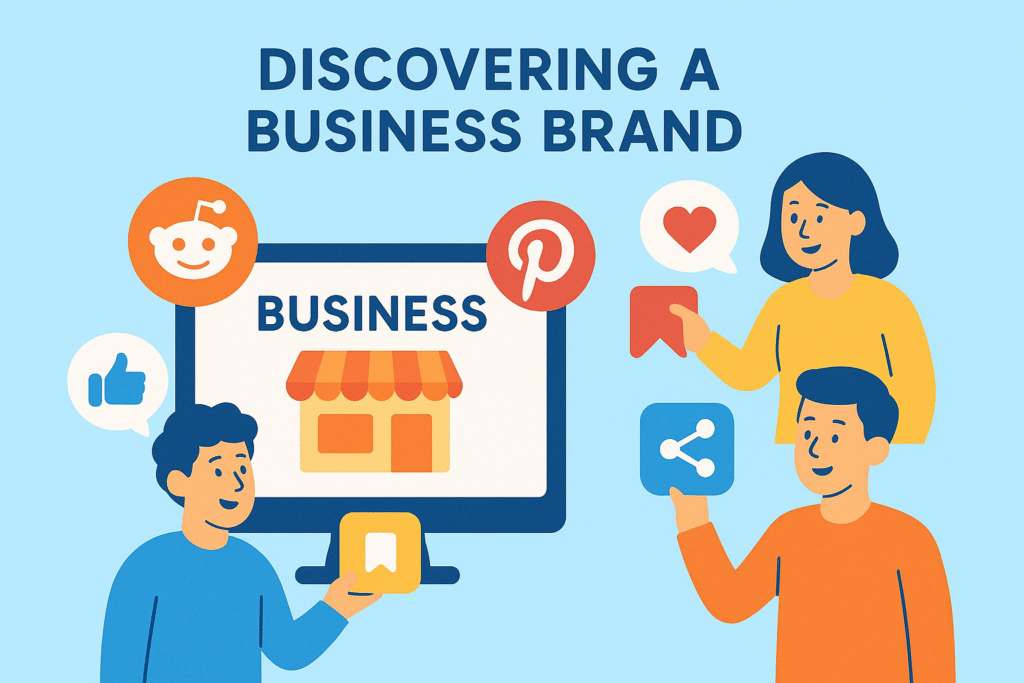
The social bookmarking for seo process includes the saving, tagging, sharing, and organising of URLs containing web pages or any kind of content-articles, blog posts, videos, etc.-on bookmarking sites for other people to find. Unlike browser bookmarks (which are kept private to an individual), social bookmarks are either public or semi-public in order to promote discovery, sharing, and community interaction.
Key components of social bookmarking include:
- Bookmarking: Saving a link to a bookmarking platform.
- Tagging / Metadata: Assigning keywords or categories so that content is visible to everyone
- Sharing / Discovery: Others can view, comment on your post, or further share bookmarked content.
- Community & Engagement: Many platforms are community-driven; what gets more attention tends to be what adds value, it will be useful for further.
2. Why Social Bookmarking for SEO Matters
Even though social bookmarking isn’t a magic bullet, it has multiple indirect but substantive benefits for SEO and traffic growth. Here are the main advantages:
2.1 Faster Indexing
When you bookmark a newly published page on several credible platforms, search engine crawlers often pick up those links faster. This helps new content show up in SERPs earlier.
2.2 Increased Referral Traffic
People browsing bookmarking sites may find your content and click through. This works especially well if the content is high quality, relevant, and well-tagged. Referral traffic diversifies your traffic sources beyond just organic search.
2.3 Link Building & Domain Authority
Even if many bookmarks are nofollow, they contribute to a natural and diversified link profile. Some bookmarking platforms allow dofollow links or lead to further sharing, which in turn can generate backlinks. Over time, the accumulation of such links helps domain authority.
2.4 Social Signals & User Engagement
Bookmarks, shares, saves, and votes are signals that content is useful. While search engines don’t always count these as direct ranking factors, they influence engagement metrics, dwell time, clickthrough rates, all of which feed into SEO.
2.5 Branding & Content Discovery
Being present in platforms where content is curated helps you gain visibility, build reputation, and reach audiences you might not reach via standard SEO and content channels. LSI terms like “brand awareness” and “online visibility” come into play here.
3. How Social Bookmarking Works
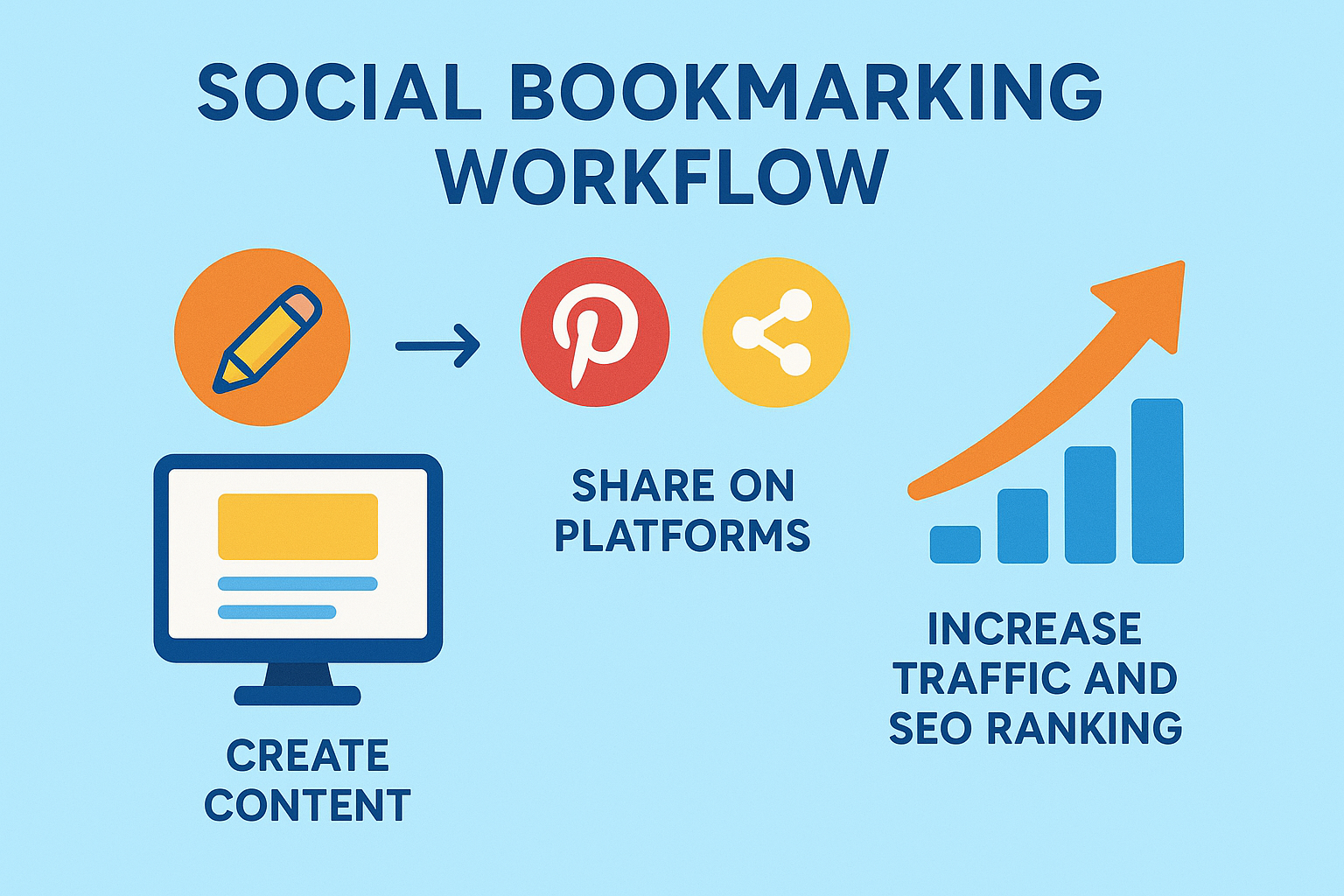
To use social bookmarking effectively, you need to understand the workflow and components:
- Create high-quality content: Informative, well-structured, original.
- Publish the content on your site.
- Select bookmarking platforms relevant to your niche or audience.
- Bookmark the content, adding a good title, description, tags / keywords.
- Share or promote within the bookmarking platform (some platforms allow comments, votes, etc.).
- Monitor traffic, indexing, engagement. Adjust strategy based on what works.
Important to remember: metadata (tags, descriptions) matters a lot. They help content discovery. Also, consistency matters: frequent good content wins over occasional spammy mass submissions.
4. Strategy: Best Practices for Effective Social Bookmarking
To get the most from social bookmarking, follow these best practices:
| Practice | Why It Matters |
| Quality over quantity | High-value content gets more attention, shares, saves; cheap or weak content may hurt reputation. |
| Platform-specific optimization | Different sites have different cultures, rules, tag systems. Tailor title, description, tags accordingly. |
| Use relevant keywords and tags naturally | Helps in discovery; avoid keyword stuffing to avoid spam filters. |
| Spread out submissions | Bookmarking to many places at once may trigger spam detection; spacing helps look natural. |
| Engage with the community | Comment, vote, share others’ content. Being an active member builds authority and trust. |
| Diversify bookmarking sites | Use both general sites (high authority) and niche / industry-specific ones for targeted traffic. |
| Use visuals where applicable | On platforms like Pinterest or image-based bookmarking, images help engagement. |
5. Choosing the Right Bookmarking Sites
Not all bookmarking sites are created equal. Here’s how to pick:
- Domain Authority (DA) / Trust: Platforms with higher DA tend to be crawled more often by search engines.
- Active Community / User Base: More users = greater likelihood of discovery, sharing.
- Niche Relevance: Sites with an audience interested in your topic yield more qualified traffic.
- Link-type Rules: Some sites give dofollow links, others nofollow; check each platform’s policy.
- Longevity and Reputation: Avoid spammy, low-quality sites or link farms; they can hurt more than help.
- Content Format Support: Some sites are visual (images, infographics), others are text or video. Pick ones matching your content type.
Examples of Strong Social Bookmarking / Content Discovery Platforms:
- Reddit (many subreddits; high engagement potential)
- Pinterest (for image-rich content)
- Mix (formerly StumbleUpon)
- Pocket (read-later tool; good for exposure)
- Niche bookmarking / forums in specific verticals
6. Tools & Metrics: Measuring Your Success
To know whether your social bookmarking is paying off, you need to track certain metrics. Here are what to monitor, and tools to use:
| Metric | What to Track | Tools |
| Referral Traffic | How many visitors are coming from bookmarking platforms | Google Analytics, platform-specific dashboards |
| Indexing Speed | How quickly new content shows up in search engines after bookmarking | Google Search Console |
| Crawl Rate | How often your pages are being crawled by search engines | Server logs, Search Console |
| Backlink Profile | New backlinks gained (direct & indirect) after bookmarking | Ahrefs, SEMrush, Moz |
| Keyword Ranking Changes | Did rankings for target and related (LSI) keywords improve? | SEMrush, Ahrefs, Rank trackers |
| Engagement Metrics on Bookmarked Content | Saves, votes, comments, shares within bookmarking platforms | Platform analytics, UTM tags, Google Analytics split by source |
7. Risks, Challenges & How to Avoid Them
While social bookmarking can boost SEO and traffic, misuse or sloppy strategy can backfire. Here are risk areas and mitigation tips:
| Risk | Problem | How to Avoid |
| Over-optimization / spam detection | Repeated identical title, description, or tags across many sites can flag spam filters | Vary metadata; use platform-specific language; space submissions over time |
| Poor-quality bookmarking sites | Low-authority or spammy sites may hurt SEO or lead to penalties | Vet each platform; avoid link farms, shady directories |
| Time & Resource Drain | Too much focus on bookmarking may divert resources from content creation, UX, technical SEO | Allocate specific time; set KPIs; review ROI regularly |
| Irrelevant or Misleading Content | If content doesn’t match audience or tag/match misleads, users will bounce, harming metrics | Use accurate titles, tags, avoid clickbait; focus on relevance |
8. Social Bookmarking in 2025 & Beyond
Looking forward, some evolving/important trends and future directions:
- AI & Machine Learning in Discovery: Bookmarking sites are increasingly using recommendation algorithms. Optimizing content to align with signals these systems favour (user behaviour, engagement, relevance) will be important.
- Visual and Voice-First Bookmarking: More content discovery via images, video thumbnails; voice assistants might also use “voice bookmarks” or “save-for-later” type behaviour. Visual assets will play bigger role.
- Integration with Read-Later & Aggregator Tools: Platforms like Pocket, Instapaper, feed aggregators could become discovery tools beyond just bookmarking.
- Focus on Authentic Engagement: Spam and over-automation will be penalised more; human-centric content, honest tagging, real interactions will be rewarded.
9. Actionable Plan: Step-by-Step Guide to Implementing Social Bookmarking
Here is a plan you can follow, especially if you’re starting from scratch or want to improve your current efforts.
- Audit existing content
See which posts have performed well already or have evergreen potential. These are good candidates for bookmarking. - Research bookmarking platforms
List 5-10 sites (general + niche) with high authority, active communities, and relevance. - Create templates for metadata
Prepare several variants of titles, descriptions, tags for similar content to avoid repeating the same wording across sites. - Set a schedule
For example: publish new blog post → within 24-48 hrs, bookmark on primary site; then over next week, on secondary ones. - Bookmark with best practice
- Use the best title
- Write helpful description (summarizing benefit or what problem it solves)
- Use 3-5 relevant tags (keywords + related topics)
- If allowed, include image/thumbnail
- Use the best title
- Share & engage
- If bookmarking site allows comments or discussions, engage.
- Share bookmarked link on your own social media, newsletter to boost initial activity.
- If bookmarking site allows comments or discussions, engage.
- Track & analyse
- Use UTM parameters or source filters in analytics to track referral traffic.
- Monitor indexing delays via Search Console.
- Every month, check which platforms give best ROI (traffic vs effort).
- Use UTM parameters or source filters in analytics to track referral traffic.
- Refine
Based on data: drop poorly performing platforms; double down on ones giving best referral traffic, engaged audience; adjust tags/titles.
10. Conclusion
Social bookmarking is one of the valuable tool in the modern SEO toolkit. Though it may not deliver the instant, dramatic impact of paid ads or viral social media campaigns, its strength lies in compounding benefits: improved indexing speed, diversified referral traffic, enhanced domain authority, better content discovery, and branding signals.
If you approach it with a strategy focused on quality, relevance, consistency, and measurement, social bookmarking can significantly boost your SEO and traffic over time. As algorithms and user behaviour continue to evolve, authentic engagement and thoughtful content curation will be more important than ever




Pingback: 8 Types of Backlinks That Actually Work for SEO